
Where Does the Rain Go? Understanding Water Infiltration
Where Does the Rain Go?
Understanding Water Infiltration
When rain falls on a pasture, crop field, or garden, where does all that water go? Some of it soaks into the ground, some evaporates, and some flows across the surface. What happens to that rainfall can tell us a great deal about the condition of our soil.
The process of water entering the soil is called infiltration. Soil with good structure allows rainfall to move into the ground, where it can be stored for plant roots and support biological activity. When water cannot soak in quickly enough, it becomes runoff, potentially carrying valuable topsoil and nutrients away with it.
Why Some Soil Absorbs Water Better
Think of healthy soil as a sponge. Its structure contains spaces between soil particles that allow water and air to move through the ground. Plant roots, earthworms, and other soil organisms help create and maintain these pathways.
When soil becomes compacted or its surface is left unprotected, water may have difficulty entering. Heavy rainfall can then collect on the surface or flow downhill, taking soil particles and nutrients with it. Soil texture, existing moisture, slope, and rainfall intensity also influence how quickly water can infiltrate.
The Hidden Cost of Runoff
Runoff represents more than lost rainwater. As water travels across exposed ground, it can carry away topsoil, organic matter, and nutrients that farmers and gardeners work hard to maintain. Over time, erosion can reduce productivity and contribute to sediment buildup in nearby streams and waterways.
Poor infiltration can also create problems during dry periods. When less rainfall enters the soil, less water may be available for plants later. Improving the soil's ability to absorb and store water can help crops and pastures make better use of the rainfall they receive.
How Regenerative Practices Make a Difference
Regenerative agriculture emphasizes practices that protect soil structure and support biological activity. Maintaining living roots, using cover crops, reducing unnecessary soil disturbance, and keeping the ground covered with vegetation or plant residue can all help improve infiltration under suitable conditions.
Plant roots create pathways through the soil, while organic matter and biological activity contribute to soil aggregation. Ground cover also helps soften the impact of raindrops, reducing surface sealing and erosion. Together, these practices can help rainfall enter the soil rather than immediately running off the surface.
A Simple Observation After the Rain
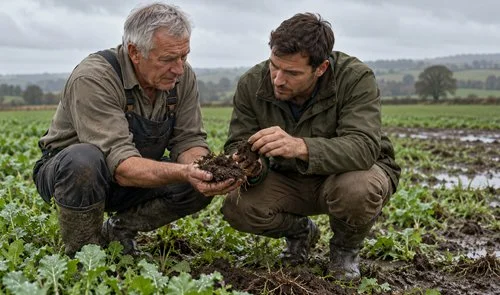
You do not need expensive equipment to begin evaluating how water behaves on your property. After a rainfall, walk through a pasture, field, or garden and observe where puddles form, where water flows, and whether soil is being carried away.
Compare an area with good ground cover to one with exposed soil. Does water collect in one location but disappear more quickly in another? These observations can help identify areas that may benefit from changes in management. Remember that drainage, slope, soil type, and rainfall intensity also affect what you see.
Make Every Drop Count
Rainfall is one of our most valuable natural resources, but how effectively we use it depends partly on what happens when it reaches the ground. By improving soil structure, protecting the surface, and encouraging biological activity, we can help more water enter the soil and remain available to support plant growth.
Understanding water infiltration is another step toward recognizing how healthy soil functions. The next time it rains, take a closer look at where the water goes. What you observe on the surface may reveal important clues about what is happening beneath it.
Next week, we'll explore what plant roots can tell us about the health and condition of our soil.
Source Notes
USDA Natural Resources Conservation Service (NRCS), educational resources on soil health, water infiltration, and soil structure.
USDA Natural Resources Conservation Service (NRCS), Soil Quality Indicators: Infiltration.
University and Cooperative Extension educational resources on runoff, erosion, and soil water management.
