
Discover what root growth can reveal about your soil's health.
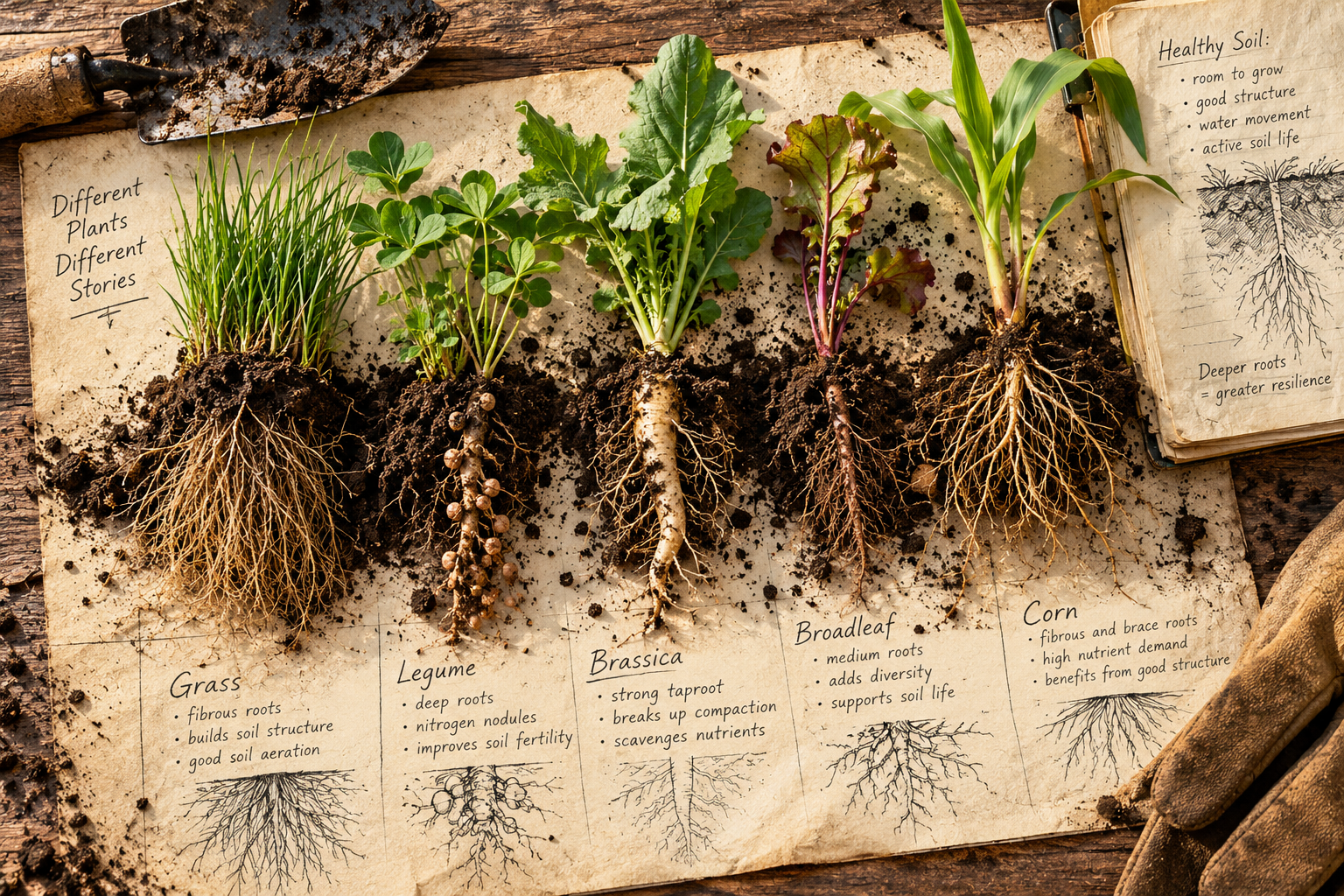
When evaluating the health of a pasture, crop field, or garden, we often focus on what we see above ground. Green leaves, strong stems, and vigorous growth are encouraging signs, but they don't always tell the whole story. Sometimes, the most valuable clues are hiding just beneath our feet. Plant roots do much more than anchor plants in place. They absorb water and nutrients, interact with beneficial soil organisms, and help maintain soil structure. Taking a closer look at how roots develop can reveal important information about the conditions your plants are experiencing.
Healthy Roots Need Room to Grow
In healthy, well-structured soil, roots can spread outward and downward through spaces between soil particles. This allows plants to reach more moisture and nutrients while creating natural channels that help air and water move through the ground. When roots encounter compacted soil, poor drainage, or other unfavorable conditions, their growth patterns may change. Instead of extending deeper, they may turn sideways, become twisted, or remain concentrated near the surface. These patterns can be valuable warning signs, as a plant may appear healthy above ground while its roots struggle to develop below.
What Root Appearance Can Reveal
Root color, shape, and distribution can offer additional clues about soil conditions. Actively growing roots often have white or light-colored tips, while older roots naturally become darker as they mature. Roots that appear unusually soft, decayed, or restricted may indicate problems involving excess moisture, disease, or soil compaction. However, no single characteristic tells the entire story. Comparing several plants and examining the surrounding soil can help identify patterns worth investigating. Different plant species also develop different root systems, so grasses, legumes, vegetables, and deep-rooted perennials won't necessarily look alike, even when growing in healthy soil.
A Lesson from The Three-Legged Stool
Sherrie L.K. Ottinger shares practical seasonal gardening advice throughout her Three-Legged Stool series, including recommendations that emphasize the importance of healthy root development. Her October gardening guidance suggests removing blooms from newly planted winter annuals to encourage plants to direct more energy toward establishing their roots rather than producing flowers. While this recommendation applies to particular ornamental planting situations, it illustrates a broader principle: strong growth above ground often depends on what is happening below the surface. Healthy roots are an important foundation for healthy plants, whether you're managing a pasture, growing vegetables, or maintaining a home garden.
Roots and the Underground Community
Plant roots are also an important part of the soil ecosystem. As plants grow, they release carbon-rich compounds into the surrounding soil, providing food for microorganisms. In return, beneficial fungi and bacteria can help plants access nutrients and support biological activity around the roots. These relationships contribute to the complex underground system that helps maintain productive soil. This is one reason regenerative agriculture encourages maintaining living roots in the ground whenever practical. Cover crops, diverse plantings, and thoughtful grazing management can help support root growth and the soil organisms that depend on it.
Take a Closer Look Beneath the Surface
You don't need specialized equipment to begin examining your plants' roots. A shovel and a few minutes of observation can reveal useful information. Carefully dig around a plant and examine its root system. Look at how deeply the roots extend, whether they spread naturally, and if they appear restricted at a particular depth. Compare plants growing in different areas of your property. Are roots developing differently in heavily traveled areas, poorly drained locations, or places with limited ground cover? These observations won't replace laboratory testing, but they can help identify areas that deserve closer attention.
Healthy Plants Begin Below Ground
The next time you walk through a pasture, field, or garden, remember that some of the most important signs of plant health are hidden beneath the surface. By paying attention to root development, soil structure, and the conditions surrounding your plants, you can make more informed management decisions that support healthier soil and stronger growth. Sometimes, understanding what's happening underground is as simple as picking up a shovel and taking a closer look.

Recommended Reading
For additional seasonal gardening advice and practical growing observations, explore Sherrie L.K. Ottinger's The Three-Legged Stool of Regenerative Ag, part of The Tennessee Dirt-Girl Series.
Source Notes
• Sherrie L.K. Ottinger, The Three-Legged Stool, October to December
• USDA Natural Resources Conservation Service (NRCS), educational resources on soil health, root growth, and soil structure.
• USDA NRCS, educational resources on soil biology and plant-root interactions.
• University and Cooperative Extension resources on soil compaction, root development, and plant health.
Coming Next Week: Soil Tests vs. Soil Health Tests: What's the Difference? Learn what different soil tests measure and how they can help you better understand the health of your soil.
