
Soil Tests vs. Soil Health Tests: What's the Difference?
Understanding what each test measures and why it matters for healthy soil.
Healthy soil is the foundation of regenerative agriculture, but understanding what's happening beneath the surface isn't always simple. Different soil tests provide different information. Traditional soil tests focus primarily on nutrients and soil chemistry, while soil health assessments examine how well soil functions as a living system. Knowing the difference can help farmers and landowners better understand their soil.
What Does a Traditional Soil Test Measure?
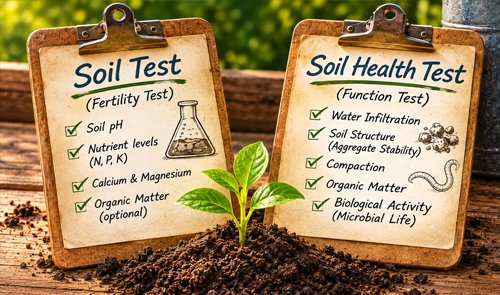
Traditional soil tests typically measure soil pH and nutrients such as phosphorus, potassium, calcium, and magnesium. Some also measure organic matter and other chemical properties. These results provide useful information about soil composition, but they don't necessarily explain how effectively plants can access nutrients or how well the soil supports biological activity.
What Does a Soil Health Test Measure?
Soil health assessments take a broader approach, examining factors such as water infiltration, compaction, soil structure, organic matter, and microbial activity. These measurements help explain why two fields with similar nutrient levels may perform differently. One might absorb rainfall and support strong roots, while another struggles with runoff or compacted soil. Understanding these differences can reveal opportunities to improve soil conditions.
A Different Approach: CaluSolv
CaluSolv, co-founded by Stan Pace, offers an approach to evaluating soil conditions that examines more than conventional nutrient availability. Its Soil Health Evaluation uses three laboratory extractions to assess available nutrients, broader mineral reserves, and water-soluble nutrients.
CaluSolv places particular emphasis on the relationship between water-soluble calcium and magnesium and its potential influence on soil conditions. This approach encourages a closer look at the resources already present in the soil and how they may contribute to plant growth. Physical field observations remain important when evaluating conditions such as compaction.
Learn more about CaluSolv's Soil Health Evaluation.
USARAAI's Approach to Healthy Soil
At the USA Regenerative Agriculture Alliance (USARAAI), we advocate farming practices that do not rely on fertilizers, pesticides, or herbicides. Instead, we emphasize maintaining living roots, keeping soil covered, encouraging plant diversity, minimizing disturbance, and managing grazing responsibly. These practices support beneficial soil organisms, natural nutrient cycling, and improved soil structure.
What Can You Learn from Your Own Soil?
You don't always need a laboratory to recognize signs of soil health. Watch how rainfall soaks into the ground, examine plant roots, and look for earthworms and stable soil structure. These observations provide valuable information that complements laboratory results.
Healthy soil isn't defined by a single number. Understanding its chemistry, structure, and biological activity helps us recognize how the entire system works together and make informed decisions that support long-term soil health.
Source Notes
· USDA Natural Resources Conservation Service (NRCS), Soil Health and Soil Quality Test Kit Guide.
· CaluSolv — Soil Health Evaluation.
· Cooperative Extension educational resources on soil testing and nutrient availability.
Coming Next Week: Don't Leave Your Soil Bare This Winter. Learn how protecting the soil surface during colder months helps reduce erosion, support soil organisms, and prepare for healthier spring growth.
