
Not all cover crops do the same thing.
Knowing the difference can help you make better choices for your soil.
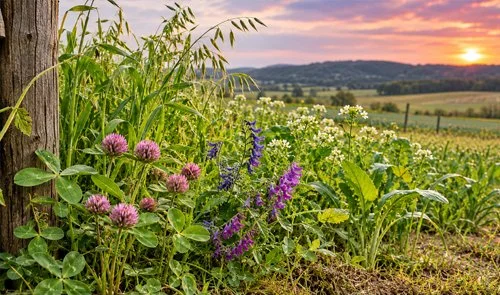
Leaving a field bare between growing seasons can create problems. Rain washes away exposed soil, nutrients can be lost, and there's little living root activity to support the organisms beneath the surface. Planting a cover crop helps protect the ground, but deciding what to plant is just as important.
Different cover crops have different strengths. Cereal rye, for example, is a good choice when you need winter ground cover. It handles cold weather well, and its dense root system helps hold soil in place. Oats and winter wheat can also provide protection, depending on your climate and planting schedule.
Clovers, hairy vetch, and winter peas offer something different. These legumes work with bacteria in the soil to capture nitrogen from the air, making them useful when building natural soil fertility is a priority.
Then there are plants like radishes and turnips. Their large taproots push down into the ground, sometimes finding their way through areas where smaller roots struggle. When those roots die and break down, they leave channels that can help water and future roots move through the soil. They aren't a quick fix for serious compaction, but they can play a useful role.
Should You Plant a Mixture?
Sometimes planting several types together makes sense. A mix of grasses, legumes, and broadleaf plants brings different root systems into the same field. That variety can benefit soil organisms and provide more consistent ground cover.
Other times, one well-chosen crop is enough. What works in one field may not be the best choice for another. Your soil conditions, local weather, and plans for the following season should guide that decision.
Start with What Your Soil Needs
At USARAAI, our approach is to build soil health without fertilizers, pesticides, or herbicides. Cover crops fit naturally into that approach because they help us make better use of the biological processes already taking place in the soil.
Before choosing what to plant, take a look at your ground. Is erosion a concern? Does water tend to run off instead of soaking in? Are you trying to maintain living roots through winter?
Those observations can help you choose a cover crop that serves a purpose rather than simply planting something because it's available.
The goal isn't to grow the most cover crops. It's to grow the ones that will do the most good for your soil.
Coming Next Week: What Happens Beneath Your Pasture During Winter? A look at what's happening underground when temperatures drop.
